*This piece originally featured in The Irish Independent*
“Red Bull? After the Jäger?” Omar, the owner of a rural French bar, held up the can and sharpened his gaze. To my left hung yellow La Rochelle flags. To my right, an electric dartboard strobing a light show ill-fitting of sleepy-Sunday-village-in-France energy. He poured the Red Bull, we cheersed, and I stuck the baguette he offered to my backpack. An hour’s walk later, I hit 800km. It was day 26 of my two-and-a-half-month Camino from Dublin to Santiago de Compostela.

My Camino was a pilgrimage, but I wasn’t doing it for religious reasons. Nor was I in it for Jäger bombs or free bread. My plan was to hike 170km from Dublin to Rosslare, 1,200km from Cherbourg through France, and 900km across Spain. I had walked two weeks of the Camino Francés before, and now, aged 32, having recently quit my job in Berlin, I was questioning my next steps and decided to follow my gut.
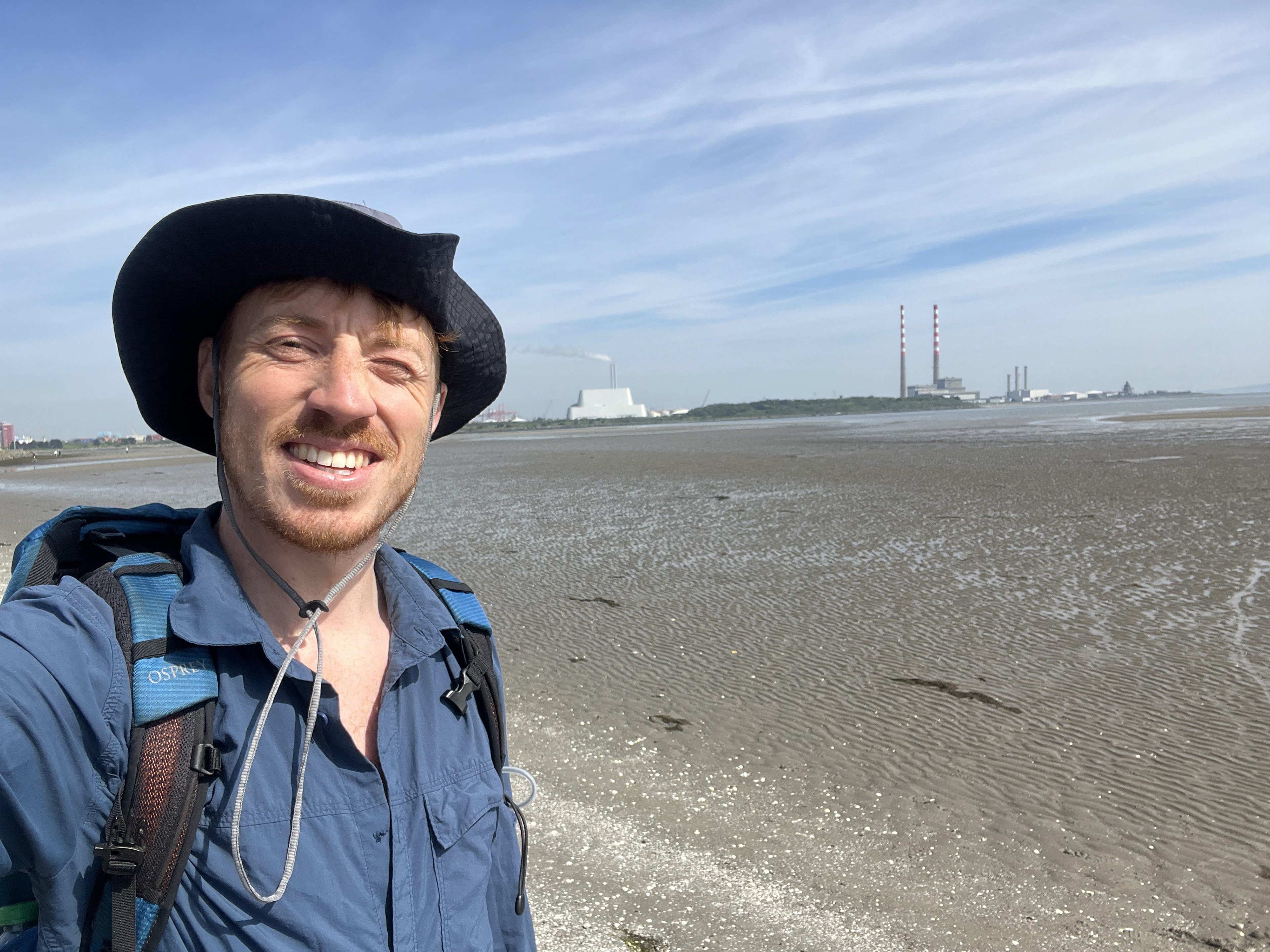
And so, last April 29, I stood outside St James’s Church in Dublin with my backpack. I was there to get my first Camino stamp, and I’d pick up more at familiar spots like The James Joyce Tower in Sandycove and Bray’s Finnbees cafe. My rough plan was to head south, knocking out 35km per day. As I left Greystones, I bumped into an old college pal, a mate’s dad, and my sister who was out for a stroll herself. “Reckon it’ll be lonely?” she asked.
Since I was a child, I’ve poeticised closing my door to ramble down to Rosslare and board the boat. With a three-month gap in my life, why not now?
The Greystones-Murrough walk paraded me past a lake-like sea and a lapwing reserve (our national bird). As trail gave way to tar, I brushed along roadside grass and holiday homes until Brittas Bay. There, a local tipped me off to a wind-free camp spot and, while chatting, a crow stole my Jelly Babies. I slept - and mourned - in the dunes.
That first week was mostly long roads and little encounters. By Curracloe, after 20km on one of Europe’s longest beaches, a fella opened with: “Where’s the man going?” It straddled day-to-day with existential. “Spain, maybe?” I replied, straddling delusion with optimism.
Five days and 170km later, I entered the ferry terminal at Rosslare alongside two other foot passengers. Waiting for a shuttle and watching a muted episode of Reeling in the Years, I compared my pack with her hard-shell suitcase and his reusable shopping bag. I wondered about their stories. I knew I’d have to conversationalise this curiosity. As the ferry pulled away, I sunk into my chair. For the first time, the butterflies took flight.

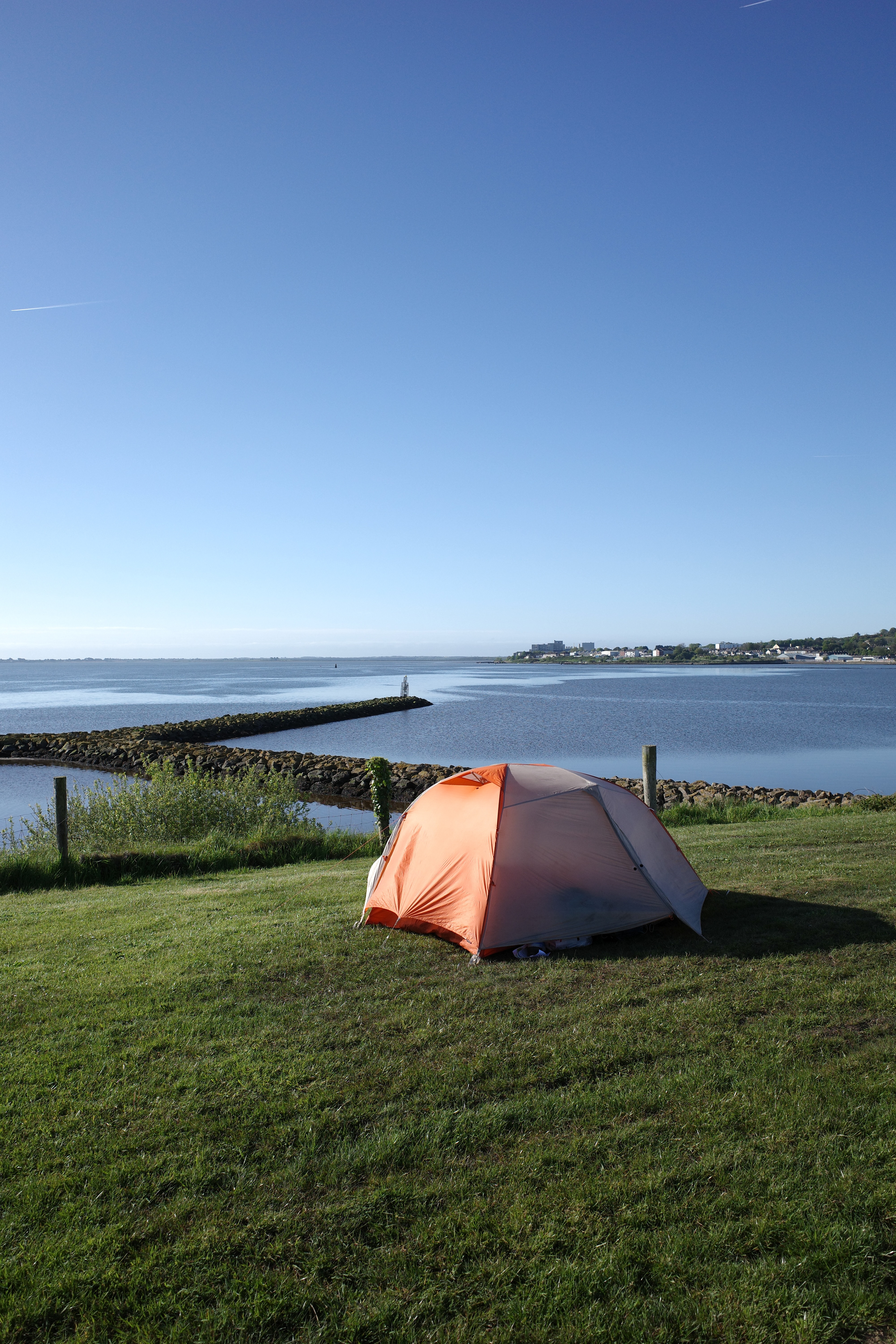
Camping at Ferrybank, Wexford, day 5. The following day, I walked the 18km along the motorway to Rosslare Port.
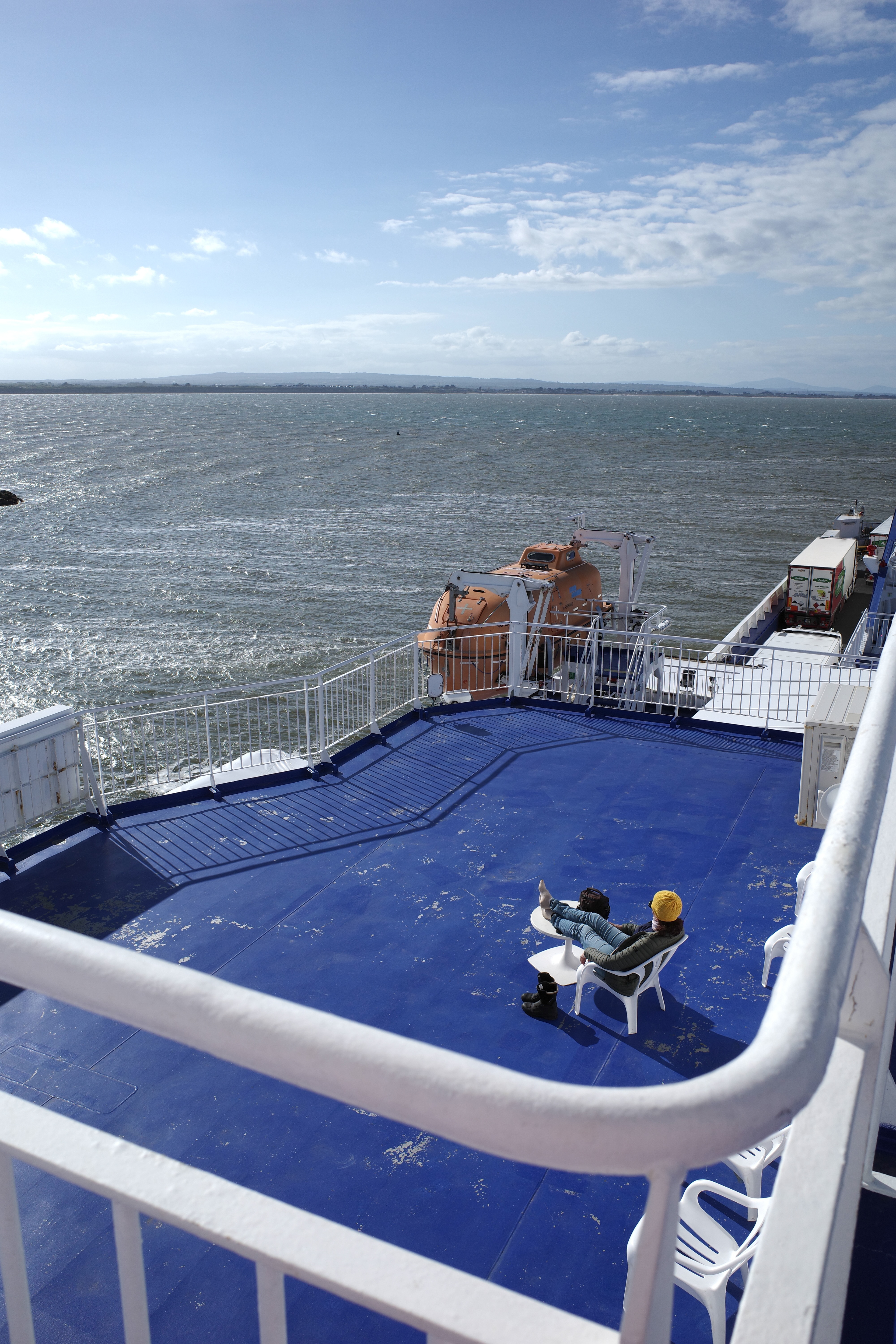
Brittany Ferries very kindly set me up with a room for the ride across. You eat VERY well on Brittany Ferries. 
I woke to a crackly intercom relaying information in French. Hours later, I was standing in the hanging drizzle of Normandy. Bienvenue. From Cherbourg, my plan was to hike 250km of the GR223 (The Customs Path) along the western edge of the Normandy peninsula. That drizzle was followed only by delight. Cliffs bookmarked the trail, meaning I rose with the wind, dipped into seaside towns like Siouville, and explored WWII bunkers in between.
Initially, I coupled wild camping with official camping grounds, but I also stayed in one magical gîte, La Buhôtellerie in Le Hague. There, a group of older French women invited me to a nettle soup lunch – soupe d’ortie – and a conversation, of which I understood 60pc.
To stimulate my brain (and combat loneliness), I began to post daily videos on social media. If you used them to plan a trip, you’d be lost. But if you were seeking irrelevant facts and pastry tribunals, you’d feel right at home.
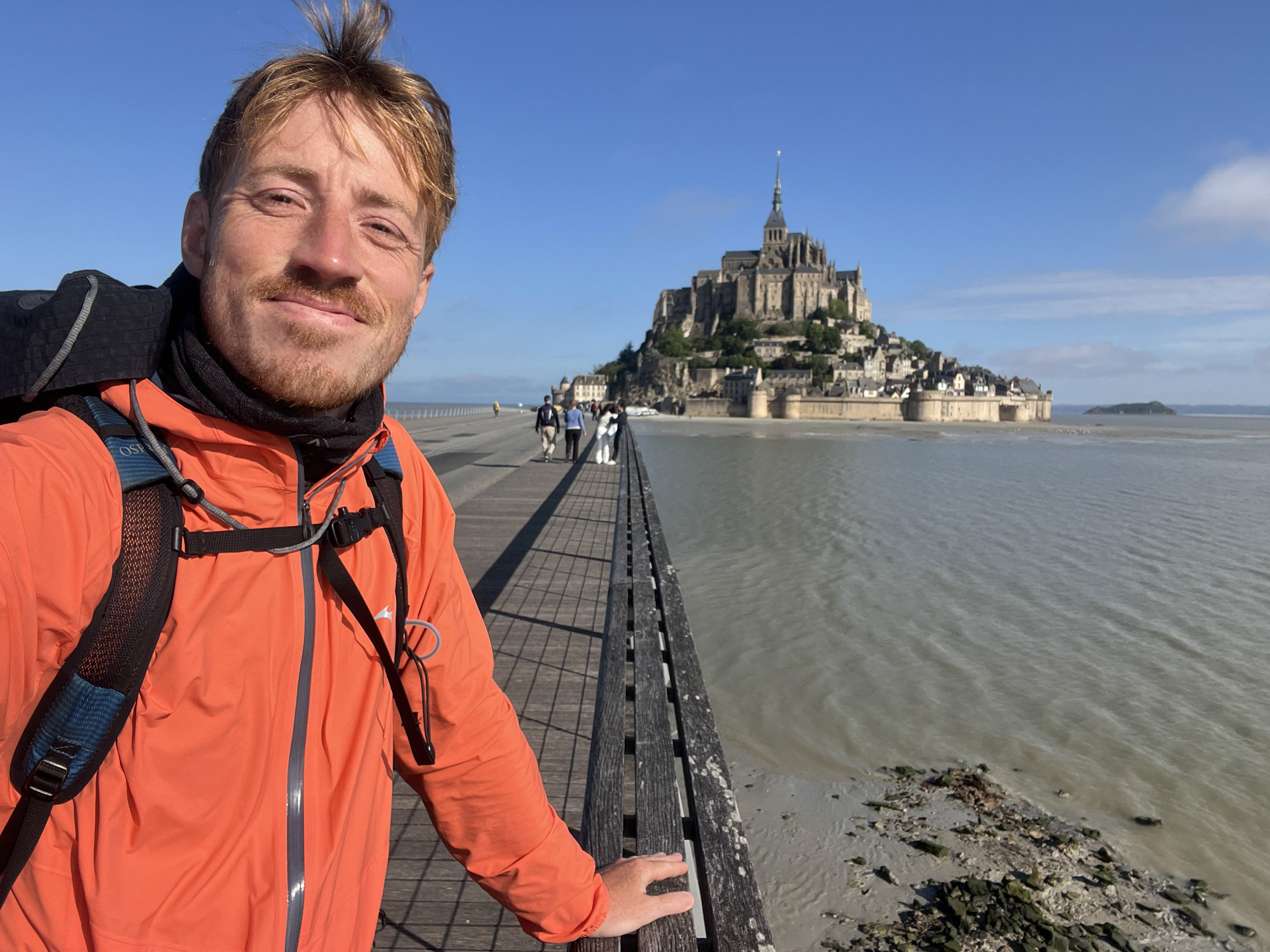
On the Customs Path, views of Jersey and Guernsey accompany you until Granville. Open Tinder and you’ll find Channel Islanders. Probably. Granville is Christian Dior’s birthplace, so it was a cool surprise when the trail looped me around his family’s gardens. Only a few kilometres further south, a rare climb caught me my first glimpse of the Unesco World Heritage Site, Mont Saint-Michel. It has been welcoming pilgrims since 966 and, that night, it welcomed one more.

Mont St. Michel. Iconic. With a pilgrim house on the island, I paid 27 euro to spend the night there (breakfast, dinner included).
After 16 days and 520km, I reached Rennes. How did I feel? My blisters had hardened, and I had learned the verb ‘dégouliner’ (to drip sweat). The canals of the GR39 had been oh so tranquil, and my first thunderstorm humbling. Good: I conversed fluently with my Rennes host family. Bad: The kids were seven.
Every day, I packed up my tent at 7.15am (ish) and I’d leave the forest or field or campground and walk for the next eight or nine hours. Boredom? Sometimes. But mostly I let my mind go blank, and that’s a privilege.
I detoured to tiny villages seeking bakeries; I marvelled at baguette vending machines; I picked up small-town historical titbits. In Beslé-sur-Villain, a monument commemorates a resistance fighter, Bernard Danes. Aged 22, a neighbour snitched him out and he was sent to Auschwitz-Birkenau where he was murdered. 
As I walked, I yapped – mostly to locals, but often to myself, rehearsing conversations. Physically and mentally, a zero day was needed, and so I hermitted in Nantes from the rain, nursing a pint in a local pub. There, I chatted with a former pro rugby player turned butcher via a self-proclaimed mid-life crisis. I also ate dinner with Sylvia, an 82-year-old Sicilian and fellow solo traveller who was on a pilgrimage of her own, ending with Mont Saint-Michel.
Ticking into week three, I was averaging 35km per day with vineyards rolling out before me. We weren’t in Kilcoole anymore.
It was the evening of day 26 that I encountered Omar, Stephane, and the Jäger bombs. After failing to find Ronan O’Gara in nearby La Rochelle (but succeeding to machine-wash my clothes at a friend’s place), I continued to the Roman town of Saintes. It’s significant because it’s where the Via Turonensis, a Paris to Saint-Jean-Pied-de-Port Camino, joined my path.
For the first time, one month in, I started to meet other Spain-bound pilgrims – like Patrice and Loïc, who had both begun in Paris. There was also Christa, who had set out from her home in Belgium. Christa, in her mid-50s, had taken a six-month sabbatical and set out solo. Simultaneously, her husband had embarked on his own motorbike trip. They planned to reunite in Galicia. 

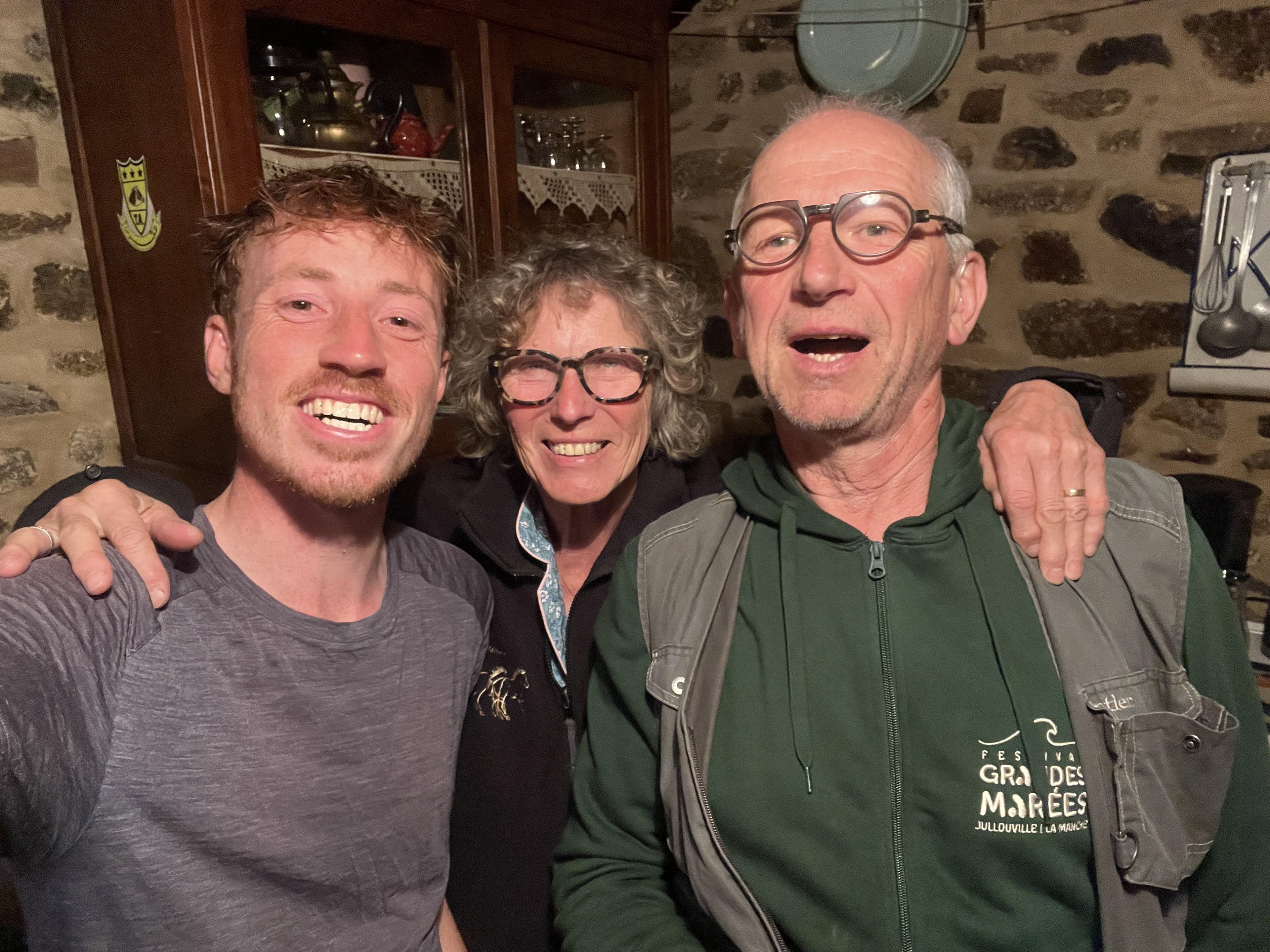
Uncle and aunt to a man I met 5 days prior, I was put up by this wonderful couple. They themselves had walked from Brittany to Santiago de Compostela only 3 years prior.
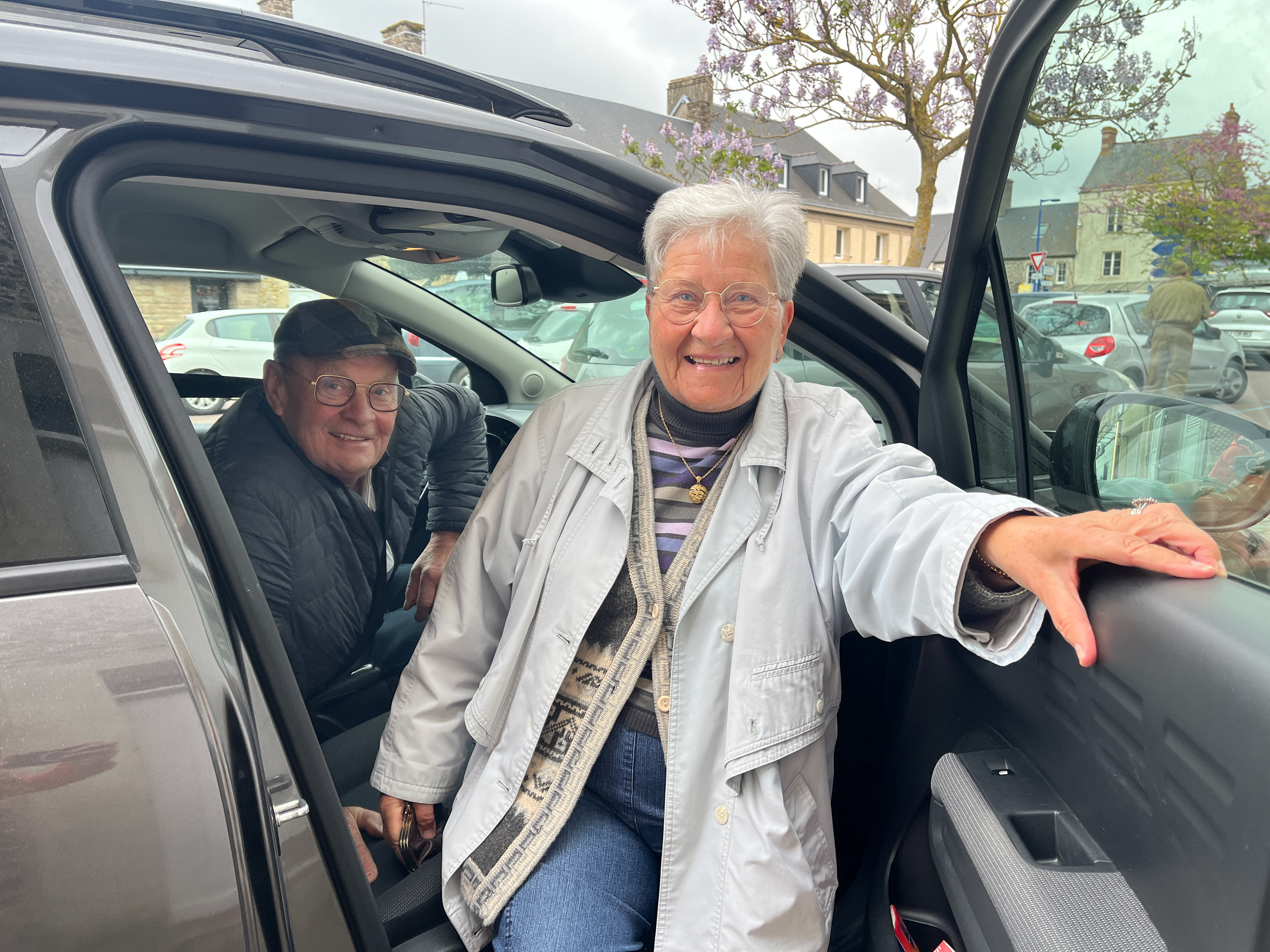
As I left the bakery, I was met by this couple, Ann and Jean, who invited me to a family lunch at their home.
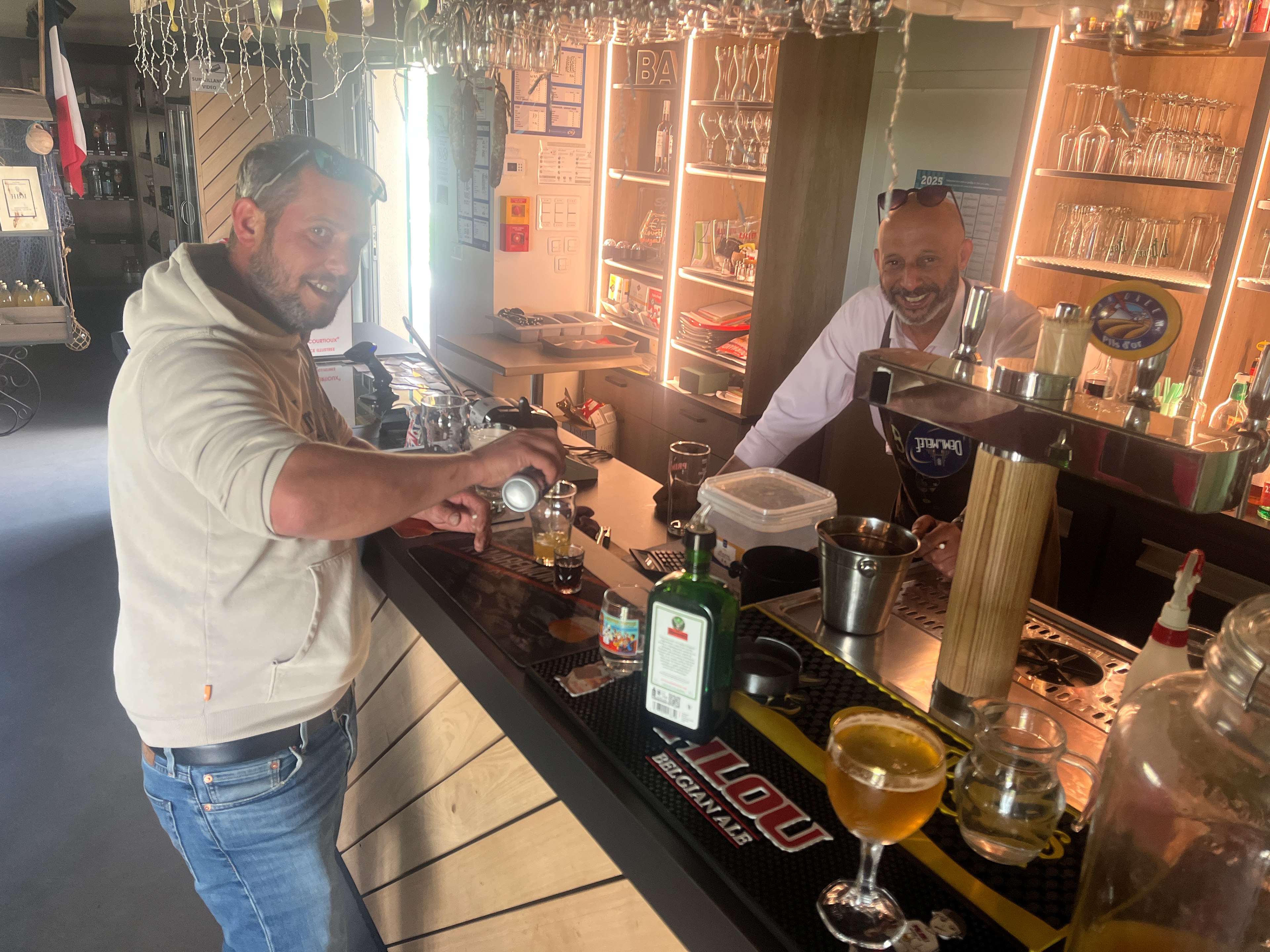
I had walked 48 km by the time I reached this quiet bar. 10 minutes later, we were playing darts and doing shots. Lordy me.
By the time I got to Bordeaux, 300km further south, I celebrated by replacing my shoes. What’s the worst thing you’ve ever smelled? 
Moving towards Spain, a flat, straight trail took me through Les Landes, western Europe’s largest man-made woodland. One night, under clear skies, I opted to cowboy camp (ie sleeping bag and no tent). Serene, right? Until a family of boar hurried past.
Emerging from Les Landes, architecture slowly morphed into half-timbered Basque buildings. I ate more pain au chocolats (they’re called chocolatines this far south) and, in the village of Lesperon, I met Chris and Hein, a Belgian couple. They too had begun their walk from home, Roeselare – the Wexford of the Benelux. Both widowed and now in their 60s, they’re among my favourite people I’ve met. Ever. Creative, gregarious souls who keep forging new loves.
On day 45, 1,400km since setting out in Dublin, I hiked into Saint-Jean-Pied-de-Port. For hundreds of years, Caminos have branched across Europe to reach this point where the Camino Francés then funnels pilgrims to Santiago de Compostela. For me, it was the end of one journey and the start of another. Only 900km to go.
Resting a day, I discovered Basque is a language isolate, meaning it’s not known to be related to any other living language. I ate talo (corn flatbread) and watched aurresku, a ceremonial dance. At the end of that first day on the Camino Francés, in the pilgrim factory-cum-monastery of Roncesvalles, I met Aidan, an 18-year-old from Belfast. Madly, he had been following my daily videos.
Walking with Aidan and Yuri, a 58-year-old Australian-Finn, we passed Hemingway’s old home and skirted school groups to reach Pamplona. Nearing July, temperatures were flirting with the high 30s. We were melting, but we were moving. Yuri flew ahead; Aidan befriended a group behind. This happens a lot. People drift. I was taking my time, waking later than most and embracing detours for the performance-enhancing tortilla de patatas. 
Moving on, I passed the famous wine fountain of Ayegui, a pilgrim spreading ashes, and the world under-24 ultimate frisbee championship in Logrono. I walked with Ger and Ben, two fine Limerick men, whose bewitching humour entertained me until Santo Domingo de la Calzada.
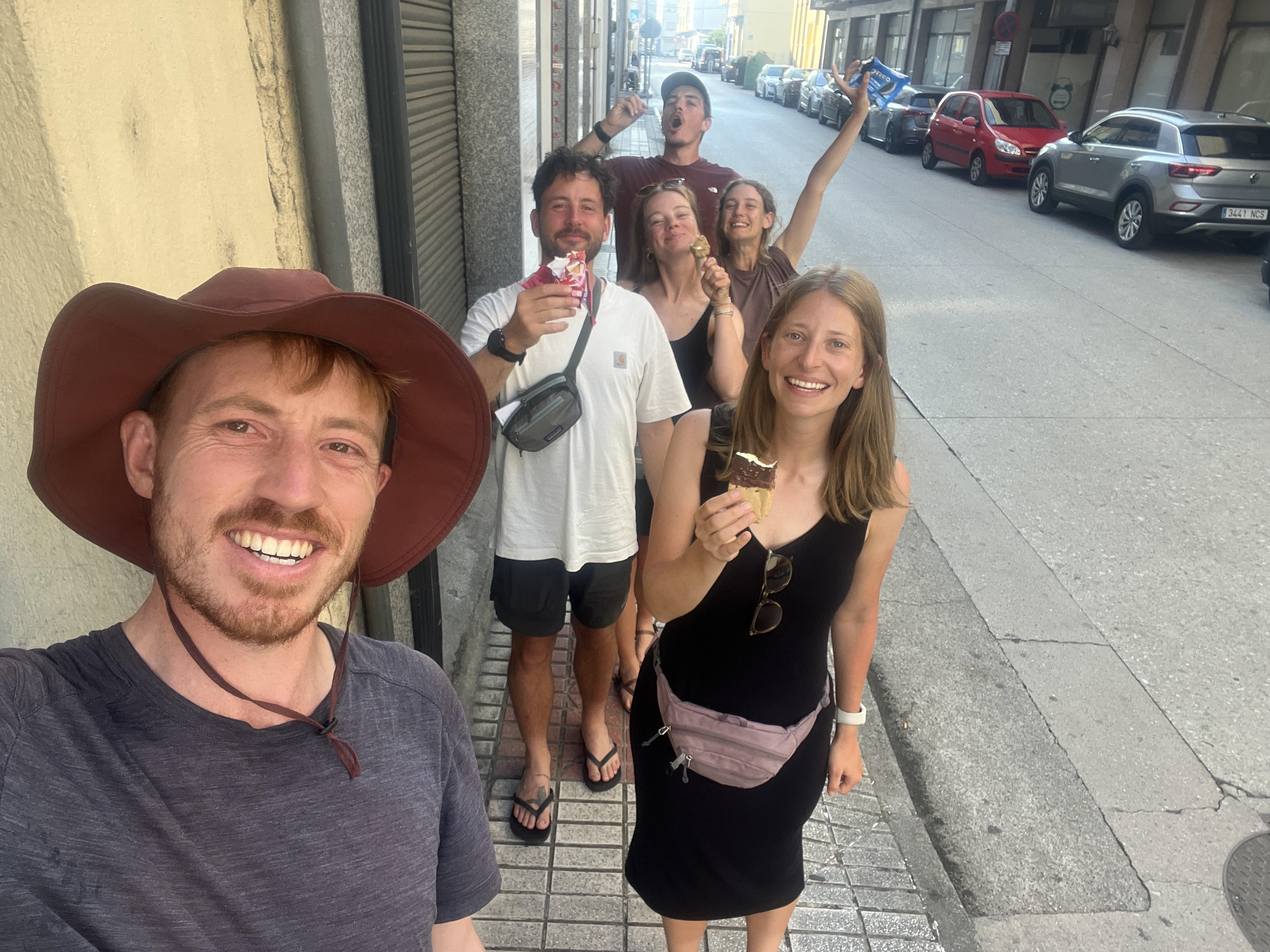
For three weeks after that, I hiked with another group, Daniel, Emma, Karis, Sara and Cam. Coincidentally, I had been following Cam on Instagram and knew he’d hiked the Pacific Crest Trail from Mexico to Canada (as had I). We hiked as one, together, until ‘the end of the world’. This walk was working out with an unspoken intention.

Ice cream for the gang. I was very lucky to meet and hike with this group.
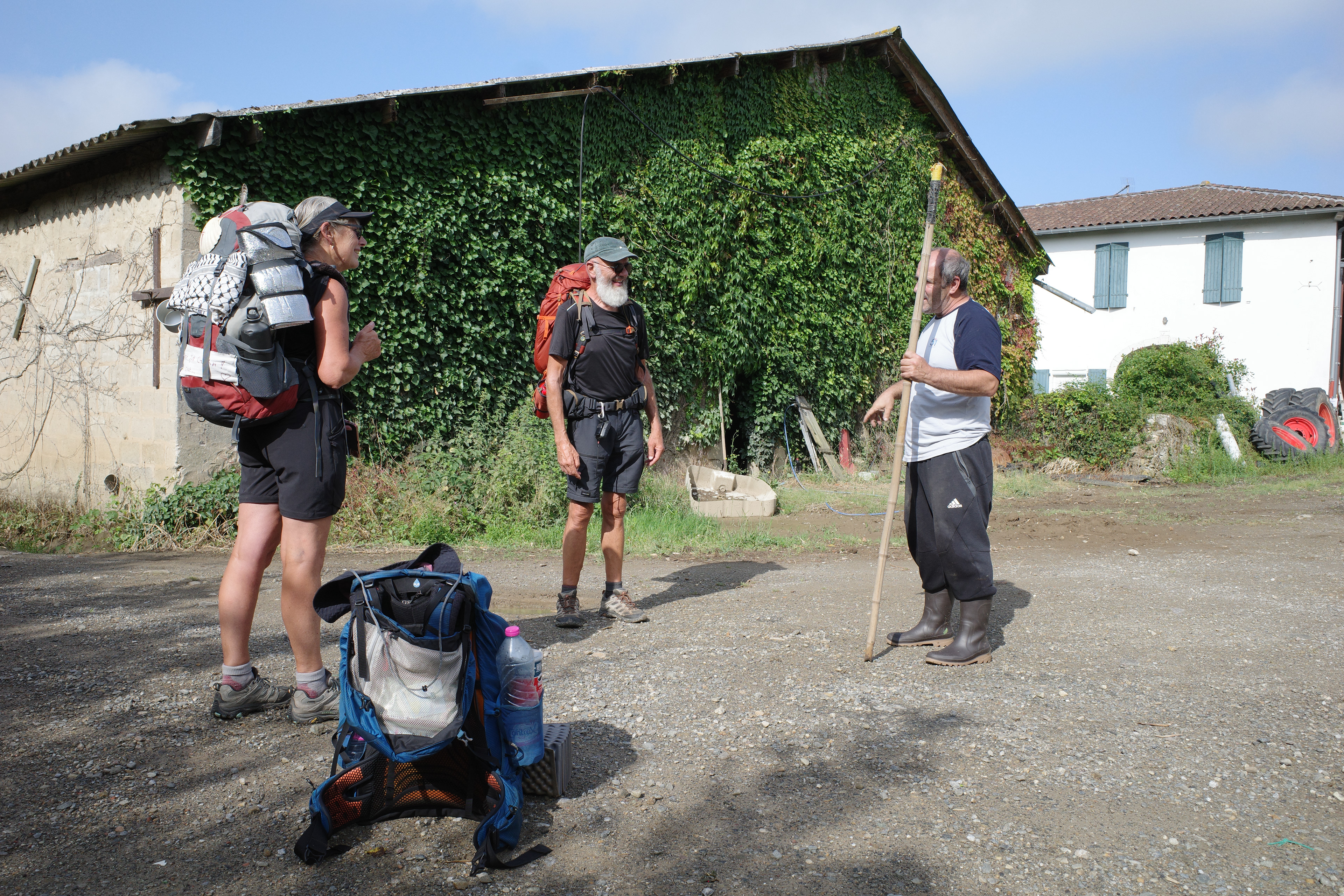
Hein and Chris, with Guy the Kiwi farmer. I met the Belgian couple in France, and I met them again at St. Jean-Pied-de-Port. I loved spending time with them. Caring, hilarious, teasing, infectious. They, too, had walked from home.
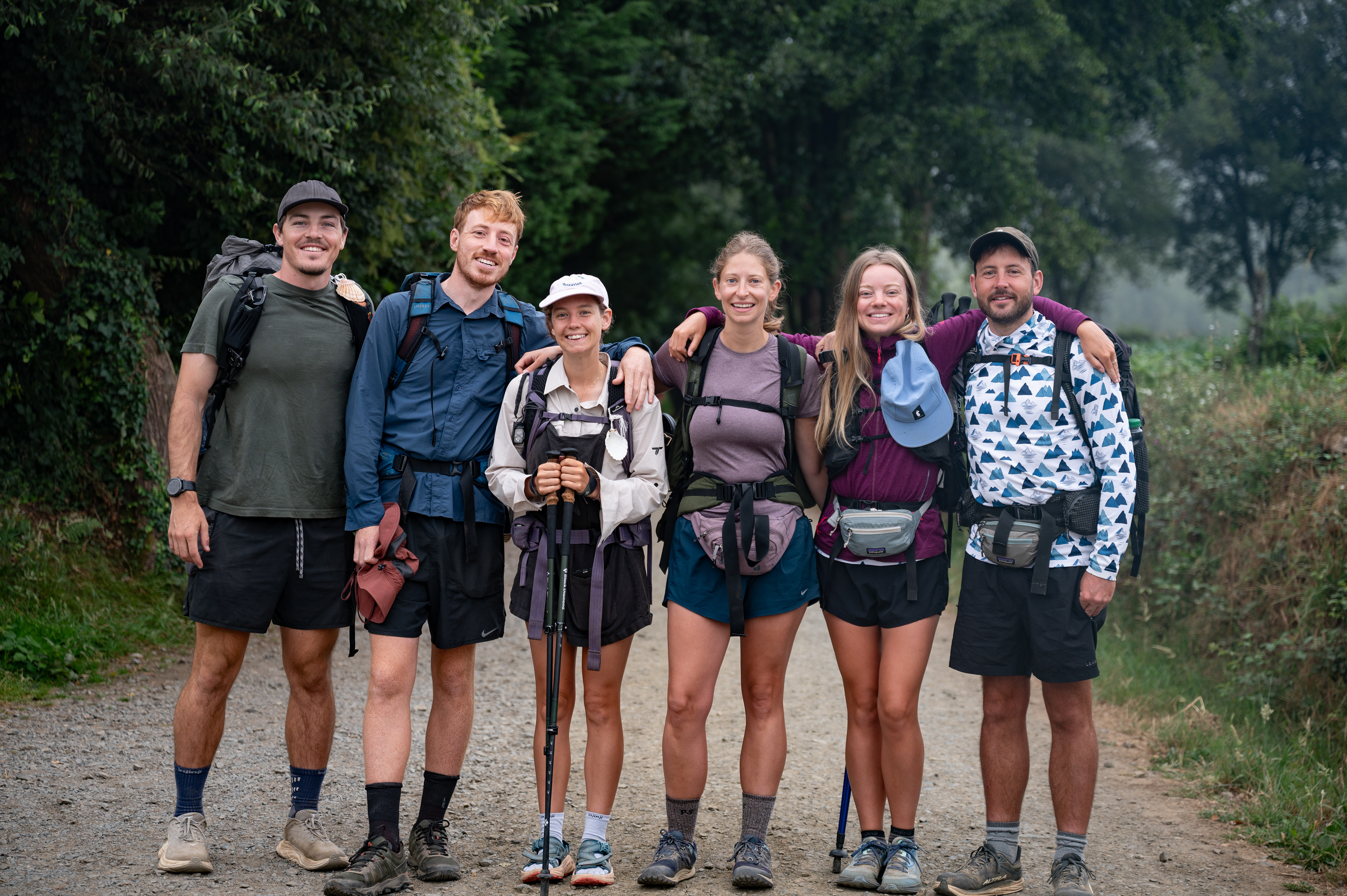
5 hours out from reaching Santiago de Compostela. 2,250 km later.
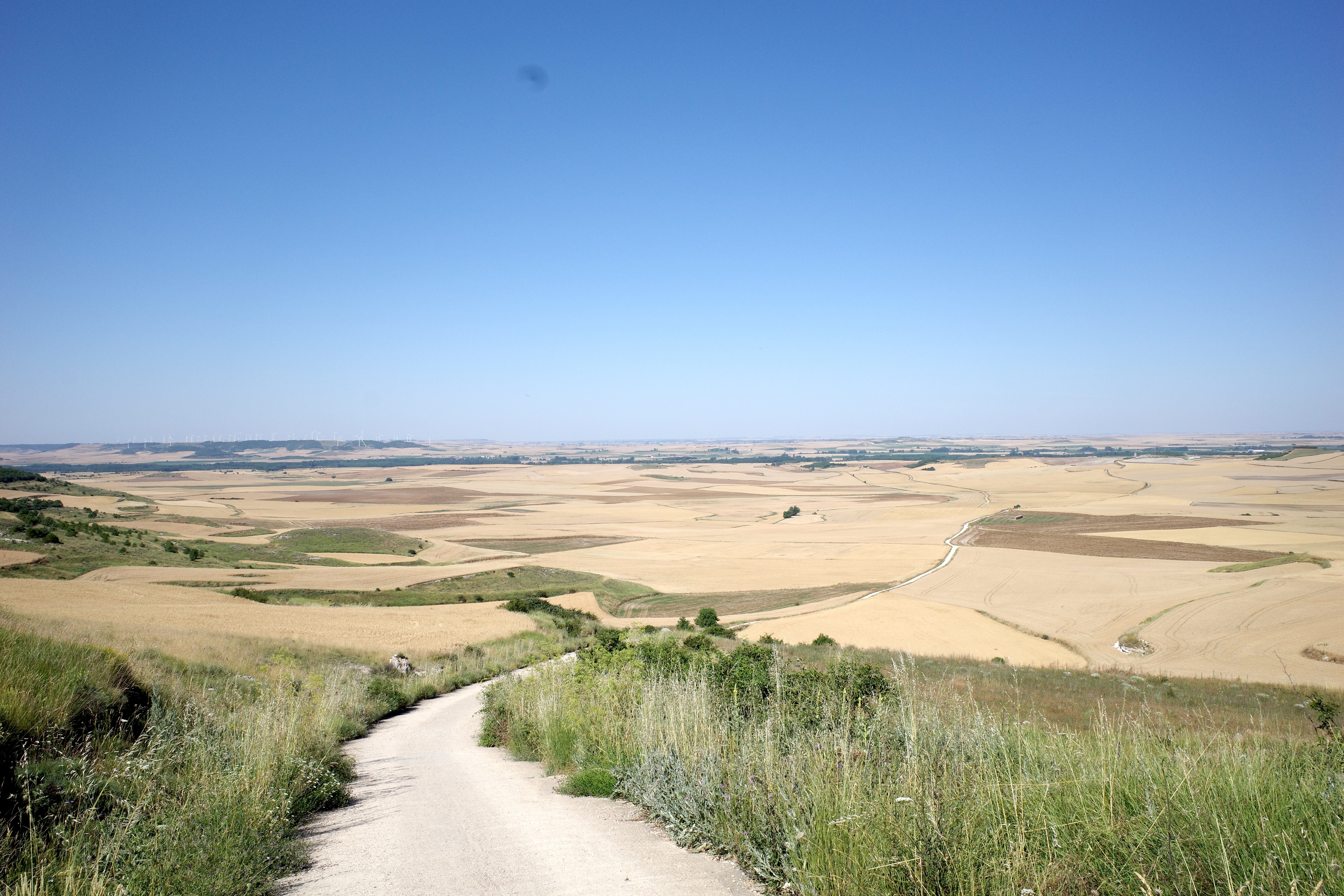
A shot of the famous Maseta. It's dry and hot but it has its charms. 
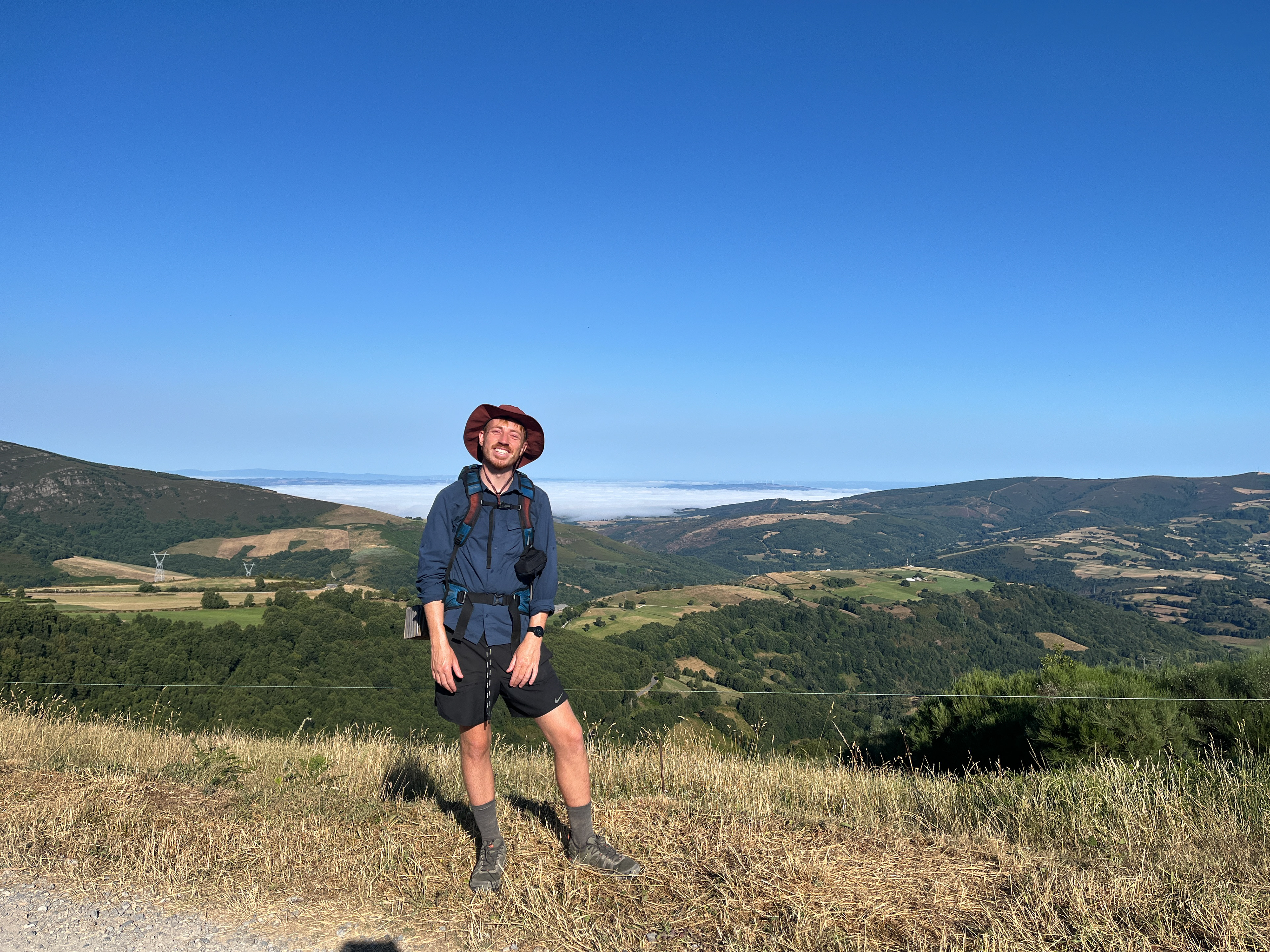
Galicia. Probably the most beautiful part of the Camino Francés.
We walked together through an Iberian heatwave. We passed churches, Franco-massacre sites, and along the ‘boring’ 170km Meseta section. We questioned whether pigeons are just doves with bad PR and I tasked the group with trivia. In Burgos, I sent my tent and sleeping bag forward, so I felt lighter. There, 2,000km now lay behind me while signs began to shout louder and louder: 350km to Santiago... 250km…
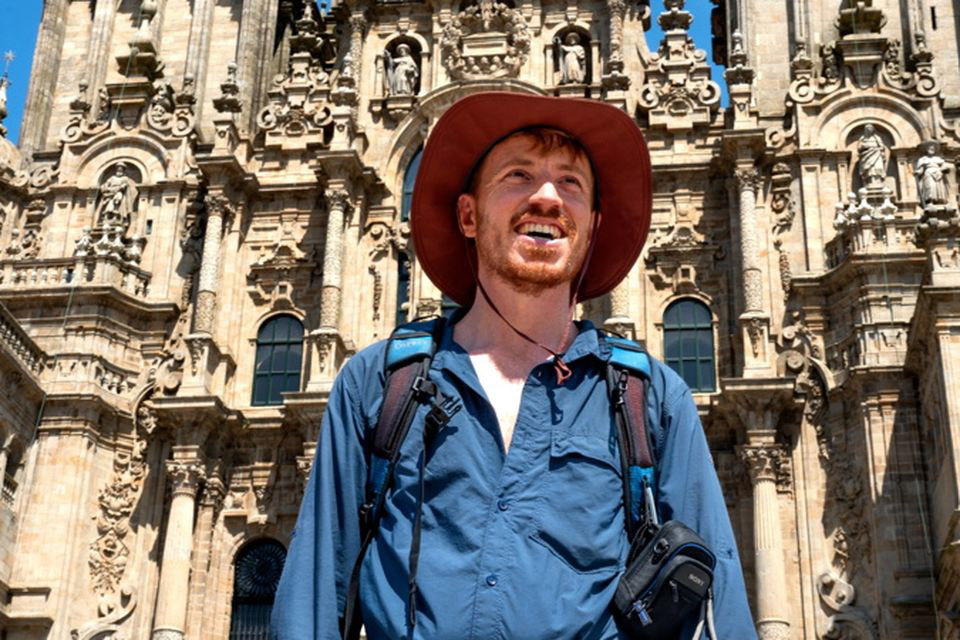
The final region of The Way is Galicia, and what a wonderful place it is. Forests plaster its mountains and its Gaita (Galician bagpipes) players even greet you with a tune. Let me say: a one-on-one performance is… awkward. But my awkwardness conceded to excitement as we entered the final 100km. In mid-July, some 73 days after setting out from home, I waltzed with my new friends into Santiago de Compostela.
The Camino is this city, and this city is the Camino. After 100km, 800km, or 2,250km, it doesn’t matter; pilgrims break into a Rob Heffernan-style race walk. There’s a buzz and there are hugs and there are deep breaths and back pains and beers and there are tears, too.
I was eternally grateful to live out a silly little dream. There was no epiphany. I didn’t meet my soulmate. I’m still at a crossroads. But I can now tell you where to find the best croissants having walked all this way.
Well, almost. Our little group had one more section – a 130km joy ride from Santiago to the sea. To see what changes, if anything. To smell the eucalyptus trees and tramp the quieter paths. To savour the bocadillos and each other’s company. On day 75, seagulls flew a chequered flag and we spotted Fisterra. We sat, laughed, and lapped it in. Next stop: North America.
Or, in our case, Muxía. We did one final day to reach this tiny town sitting upon the rocks. There, as the sun set, I clasped a shell I had plucked from Ballinesker Beach 2,400km ago. In my other hand, I held a necklace – a dove – one I gave to my mum when I was eight, and one I took back when she passed away two years later. 
“Where’s the man going?”
I’m not so sure, but I’ve zero regrets with the way I went.

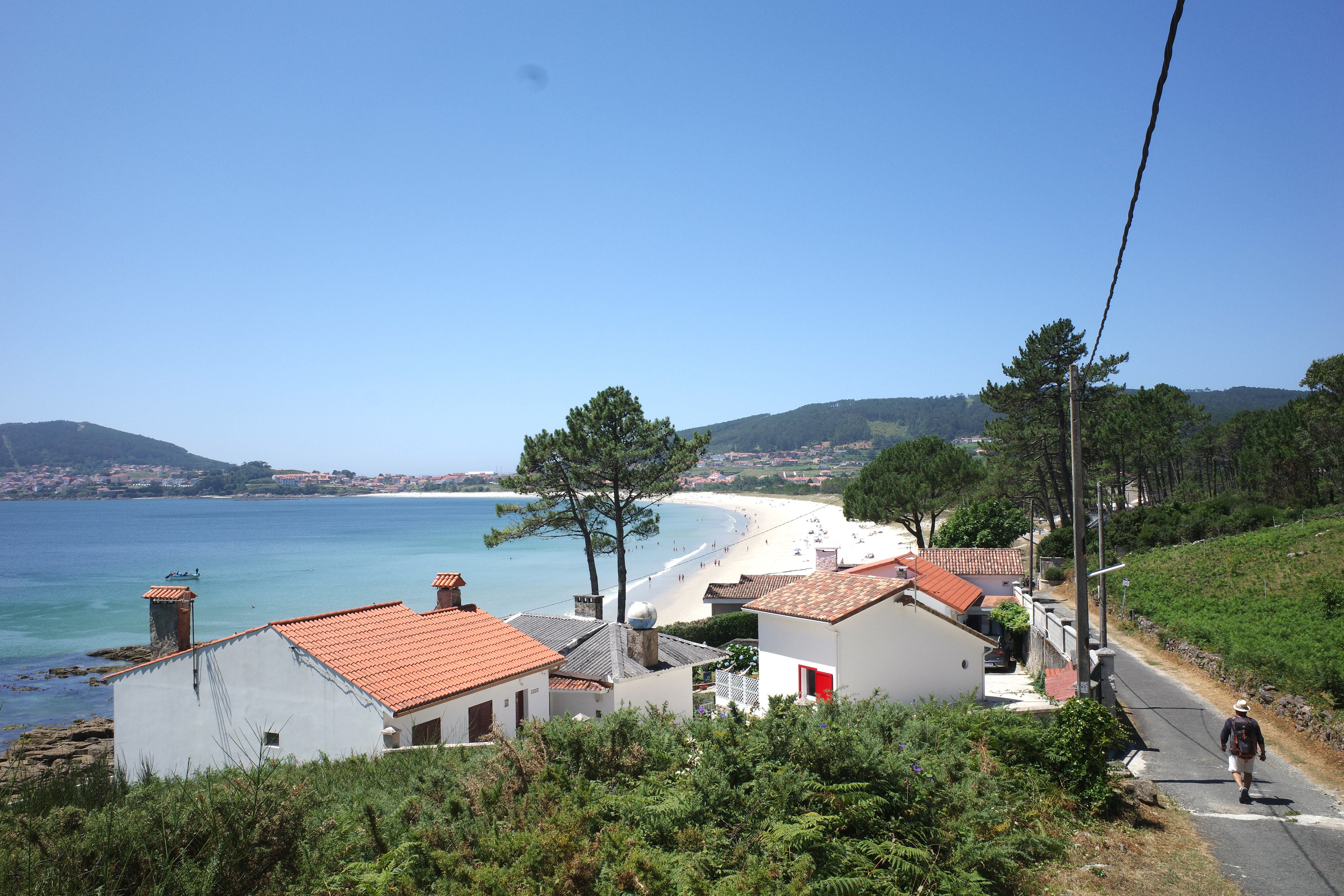
The first time seeing the sea since La Rochelle. Had I not made that detour 1.5 months prior, my last sighting of the coast would've been Mont St. Michel on day 9. This photograph is from day 76.
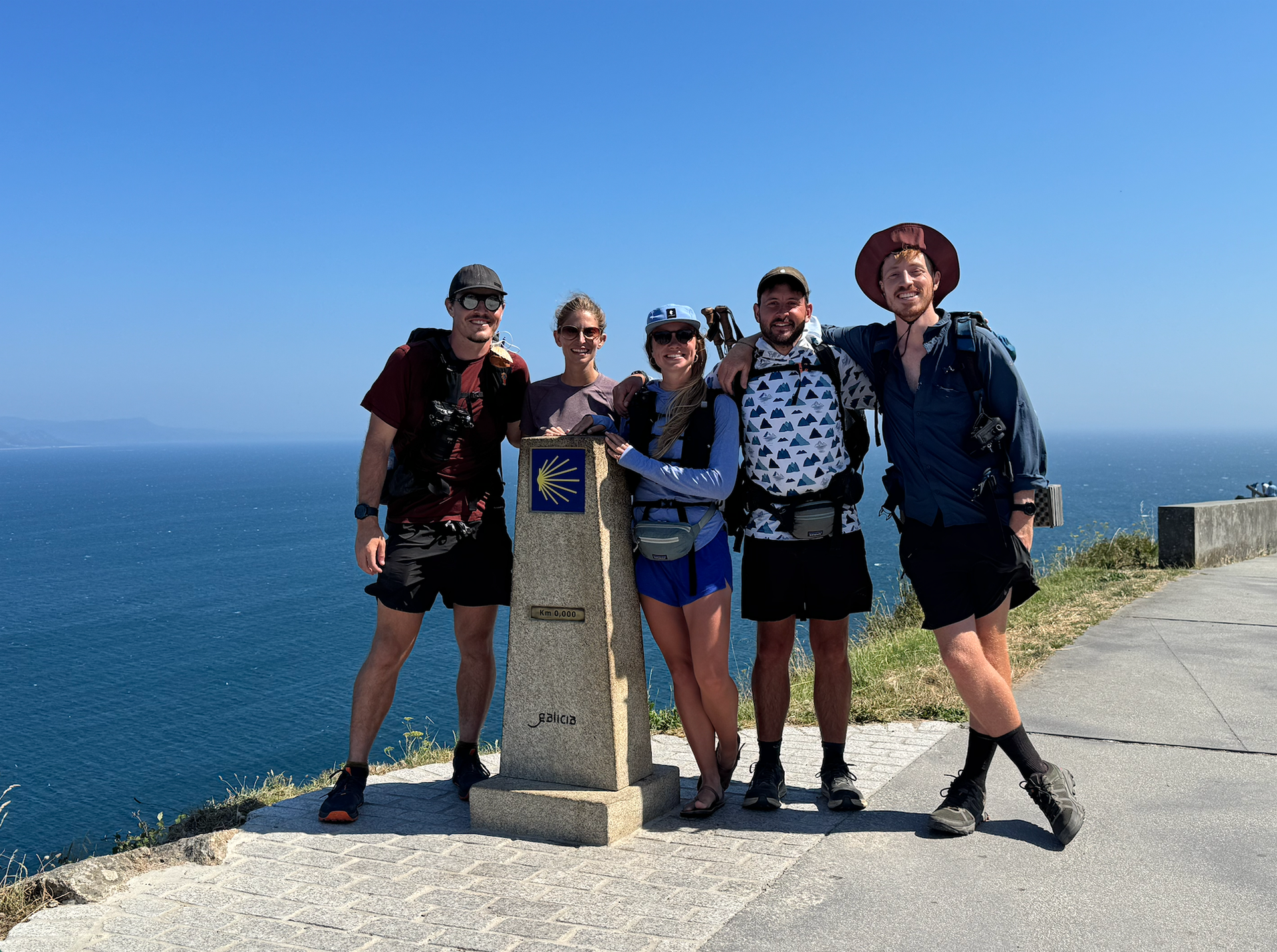
The end of the world. After spending the night in Fisterra, we continued on to Muxia to finally call it a day. What a time it was. 

You may also like

Back to Top